Outdoor Planters and Greenery: Adding Life to Your Patio
A bare patio feels like an unfinished room. The fastest way to fix that? Plants. You don't need a green thumb, a big yard, or expensive landscaping — just the right planters, the right plants, and a watering can. Here's everything you need to turn your patio from concrete jungle to actual jungle.
Why Planters Matter More Than Plants
The planter is the foundation. Cheap plastic pots crack in the sun, stain your deck, and look terrible in photos. A good planter adds weight, texture, and style to your space — and protects your plants from root rot and heat stress.
What to look for:
- Drainage: Must have drainage holes. No exceptions. Plants sitting in water die.
- Material: Fiberglass is lightweight and durable. Metal heats up in sun. Ceramic is heavy and beautiful but cracks in frost.
- Size: Go bigger than you think. Small pots dry out fast, restrict root growth, and tip over in wind.
- Color: Light colors stay cooler in direct sun. Dark colors absorb heat and can cook roots.

Tall Statement Planters: FENCY Outdoor Planters (Set of 2)
27-inch tall planters with a modern rectangular design. Fiberglass composite is lightweight but looks like stone. Built-in drainage holes and a water reservoir layer so you can't overwater. Perfect flanking a patio entrance or as a privacy screen.
View on Amazon →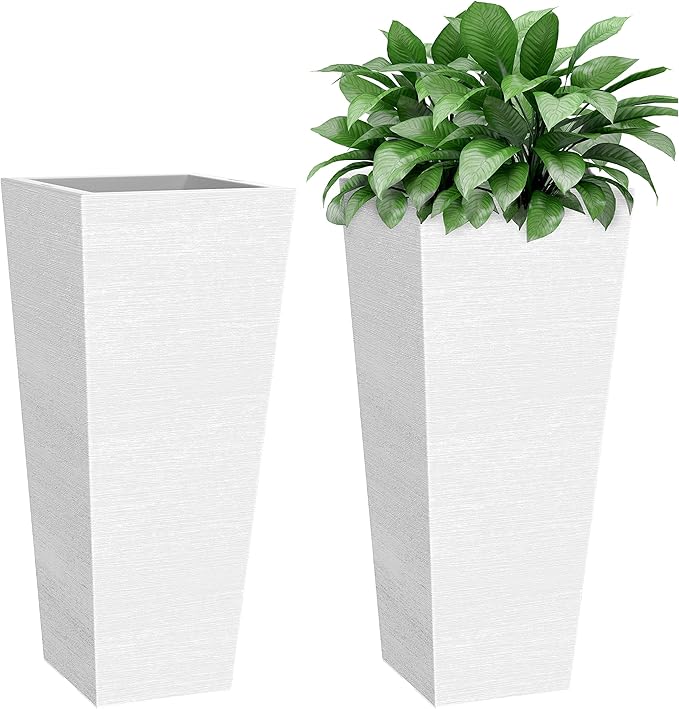
Natural Look: Verel Tall Outdoor Planters
These woven-texture tall planters have a natural, earthy look that blends with any patio style. UV-resistant material won't fade. Includes drainage plugs and a raised bottom for air circulation. Works equally well for flowers, herbs, or small shrubs.
View on Amazon →Best Plants for Patios (Beginner-Friendly)
You want plants that thrive in containers, handle some neglect, and look good from spring through fall. Here are the winners:
For Full Sun (6+ hours direct light)
- Lantana: Nearly impossible to kill. Drought-tolerant, attracts butterflies, blooms all summer.
- Geraniums: Classic patio plant. Bright colors, blooms for months with deadheading.
- Lavender: Looks gorgeous, smells amazing, repels mosquitoes. Needs well-draining soil.
- Succulents: For the forgetful waterer. Sedum and echeveria do great in shallow pots.
For Shade or Part Sun
- Ferns: Boston ferns love shady patios. Lush, green, instant tropical vibes.
- Hostas: Big beautiful leaves, low maintenance. Come in green, blue, and variegated varieties.
- Impatiens: Flower power for shady spots. Bloom nonstop from spring to frost.
- Caladiums: Heart-shaped colorful leaves. Best in warm climates or brought inside for winter.
For Herbs and Edibles
- Basil: Loves sun, loves water, smells incredible. Use in cooking all summer.
- Mint: Invasive in the ground but perfect in containers. Mojito ingredient. Just keep it in a pot.
- Rosemary: Drought-tolerant perennial. Works as both a herb and an ornamental shrub.
- Cherry Tomatoes: Patio varieties like 'Tiny Tim' or 'Tumbling Tom' grow well in 10-inch pots.
The Thriller-Filler-Spiller Formula
Professional planters use this approach for a reason — it works every time:
- Thriller (center): Tall, dramatic plant. Ornamental grass, tall salvia, or a small upright evergreen.
- Filler (middle): Medium-height, bushy plants. Geraniums, petunias, or coleus.
- Spiller (edges): Trailing plants that cascade over the rim. Sweet potato vine, ivy, or trailing petunias.
Use one thriller, two or three fillers, and one or two spillers per pot. Plant in a triangle or circle so it looks full from all angles.
Soil and Drainage Setup
Don't use garden soil in containers — it compacts, drains poorly, and is full of weed seeds. Use a quality potting mix designed for containers.
- Potting mix: Lightweight, holds moisture, drains well. Look for mixes with perlite or vermiculite.
- Don't add rocks at the bottom: Old myth. It actually creates a perched water table and makes drainage worse.
- Add mulch: A 1-inch layer of mulch on top reduces evaporation and keeps roots cool.
- Fertilize regularly: Container plants use up nutrients fast. Use a slow-release fertilizer at planting, then liquid feed every 2-3 weeks.
Arranging Planters on Your Patio
How you arrange planters matters as much as what's in them:
- Frame the entrance: Two matching tall planters flanking your door or patio entry.
- Create a grouping: Cluster 3-5 pots of different heights together. Odd numbers look more natural.
- Define the dining area: A row of planters along one side creates a natural wall.
- Hide ugly things: Tall planters in front of AC units, utility meters, or exposed walls.
- Add vertical interest: Hang trailing plants from shepherd's hooks or wall-mounted planters.
Watering Schedule
Overwatering kills more patio plants than underwatering. Here's the rule:
- Check daily in summer: Stick your finger 2 inches into the soil. If dry, water thoroughly.
- Water deeply: Soak until water runs out the drainage holes. Light sprinkling encourages shallow roots.
- Water in the morning: Less evaporation, less disease risk. Evening watering can cause fungal issues.
- Self-watering planters help: They have a reservoir at the bottom that wicks water up. Great for vacation or busy schedules.
The Bottom Line
You don't need to spend hundreds on landscaping to make your patio feel alive. Two tall planters with the right plants, a couple of herb pots near the kitchen door, and a hanging basket or two — that's all it takes. Start with the thriller-filler-spiller formula, use quality potting mix, and water consistently. Your patio will look like a magazine cover by midsummer.