How to Zone Your Patio Into Outdoor Rooms
The difference between a patio that gets used and one that collects dust usually comes down to one thing: intentional design. Instead of shoving all your furniture into one corner and hoping for the best, think of your outdoor space as a series of rooms — each with a purpose. Here's how to create distinct zones that make your patio feel like a real extension of your home.
Why Zoning Works
Indoor rooms work because each one has a clear purpose — the kitchen is for cooking, the living room is for relaxing, the bedroom is for sleeping. Outdoor spaces benefit from the same logic. When you define zones on your patio, you:
- Make a small space feel larger by creating visual boundaries
- Give every seat a reason to exist (no more empty chairs no one uses)
- Allow multiple activities to happen simultaneously — adults dining while kids play
- Create natural traffic flow so people aren't bumping into each other
You don't need a huge patio to zone effectively. Even a 12×16-foot space can fit two or three distinct areas with the right layout.
Zone 1: The Dining Area
Every outdoor living space needs a place to eat. The dining zone is usually the anchor of the patio — the largest furniture grouping and the first thing you set up.
Placement Tips
- Position the dining table closest to the house door for easy food transport
- Allow at least 3 feet of clearance on all sides for chair pull-out and foot traffic
- If you have a grill, keep it within 10–15 feet of the dining table but never directly under a covered area
- Place the table where it gets afternoon shade if possible — eating in direct sun is miserable
Defining the Space
The easiest way to define a dining zone is with an outdoor rug underneath the table. It visually anchors the space and makes bare feet comfortable on hot surfaces. The rug should extend at least 24 inches beyond the table on all sides so chairs stay on it when pulled out.
Anchor Piece: HERA'S HOUSE 8-Piece Outdoor Furniture Set

A complete wicker patio conversation set with cushions — works as both dining and lounge seating depending on how you arrange it. Weather-resistant frame with fade-resistant cushions.
View on Amazon →
Ground the Zone: CAMILSON Outdoor Rug 6x9
Flatweave polypropylene rug that defines the dining area. Waterproof, UV-resistant, and easy to hose clean. A 6x9 size works under most 6-person patio tables.
View on Amazon →Zone 2: The Lounge Area
The lounge zone is where you actually relax — think comfortable seating, soft lighting, and a spot to put your drink. This is the space that makes your patio feel like a living room instead of a parking lot with chairs.
Creating Separation
You don't need walls to separate zones. Use these visual cues instead:
- Rugs: A second rug under the lounge furniture creates a clear boundary from the dining zone
- Planters: Tall planters act as natural room dividers — they add greenery and create visual separation without blocking light
- Lighting: String lights over the lounge zone create a different mood than the dining area's functional lighting
- Level changes: If your patio has steps or a raised section, use the level change as a natural zone divider
Comfy Seating: HERA'S HOUSE Wicker Patio Set with Swivel Chairs

Swivel chairs make conversation easier — no awkward shuffling to face whoever's talking. The wicker design works with any decor style, and the cushions are thick enough for actual comfort.
View on Amazon →Room Divider: FENCY Tall Outdoor Planters (Set of 2)

Place these between zones to create visual separation. Tall enough to define a space without blocking the view. Works with any plants — tall grasses look especially good.
View on Amazon →Zone 3: The Shade & Shelter Corner
Every patio needs a spot where you can sit without getting roasted by the sun or rained on. This zone doesn't need its own furniture — it's defined by the overhead coverage.
Shade Options
- Patio umbrella: Most flexible option — move it where you need it. A 10-foot umbrella covers a dining table or a small lounge grouping.
- Shade sail: Modern look, covers a larger area, but requires anchor points.
- Pergola: Permanent structure, best for large patios. Add climbing plants for natural shade.
- Market umbrellas: Multiple smaller umbrellas can shade different zones independently.
Flexible Shade: Toolsempire 10ft Patio Umbrella

Large enough to shade a 6-person dining table or a lounge conversation set. Crank mechanism for easy opening, tilt function to track the sun. Comes in multiple colors.
View on Amazon →Lighting: The Glue That Ties Zones Together
Lighting is what makes your patio usable after 6 PM — and it's the single cheapest way to transform the feel of your outdoor space. Different zones need different lighting approaches.
Dining Zone Lighting
You need enough light to see your food. String lights hung directly over the dining table work well — aim for 8–10 feet of height so they illuminate without shining in anyone's eyes. If your table is under an umbrella, clip-on lights work too.
Lounge Zone Lighting
Go softer here. Drape string lights along the perimeter of the lounge zone rather than directly overhead. The goal is ambient glow, not task lighting. Candles and lanterns on side tables add warmth.
Pathway Lighting
If you have walkways between zones or from the house to the patio, low solar stake lights prevent tripping and guide foot traffic naturally.
Best All-Around: addlon 100FT LED Outdoor String Lights

100 feet is enough to light both the dining and lounge zones on most patios. Commercial-grade wire with shatterproof bulbs. Connect multiple strands for larger spaces. Weatherproof for year-round use.
View on Amazon →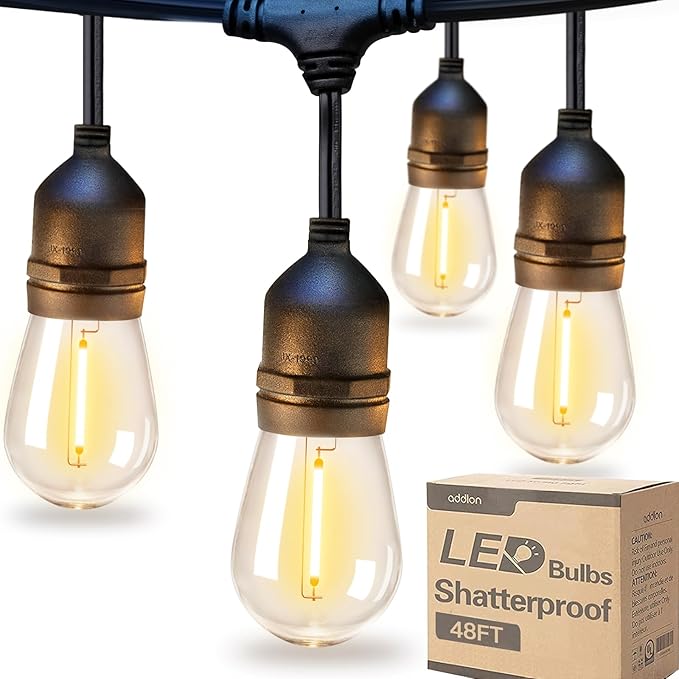
Smaller Spaces: addlon 48FT LED Vintage String Lights
48 feet covers a single zone perfectly. Edison-style bulbs give off a warmer, more vintage glow. Great for a small lounge area or wrapping around a pergola.
View on Amazon →Layout Ideas for Common Patio Sizes
Small Patio (10×12 feet) — 2 Zones
With limited space, focus on dining + lounge. Place a small bistro table against one wall for dining, and a loveseat with a side table on the opposite side for lounging. One rug under each grouping defines the zones. String lights along the perimeter tie it together.
Medium Patio (12×20 feet) — 3 Zones
Room for dining, lounge, and a shade corner. Dining table near the house door, lounge furniture in the middle, and an umbrella with a couple of chairs at the far end for a quiet reading spot. Use planters between the lounge and the quiet corner.
Large Patio (20×20+ feet) — 4+ Zones
Add a grilling station, a fire pit conversation circle, or a kids' play area. Large patios can handle more zones without feeling cramped. Use rugs, planters, and lighting changes to create clear boundaries between each area.
Common Zoning Mistakes to Avoid
- Pushing everything against the walls: Float furniture away from edges to create more intimate groupings
- One giant rug: Multiple smaller rugs define zones better than one large one
- Ignoring traffic flow: Leave clear walkways between zones — at least 3 feet wide
- Too much furniture: A few well-chosen pieces beat a cluttered patio every time
- Forgetting shade: A beautiful lounge zone is useless if it's too hot to sit in
- Uniform lighting: Vary brightness by zone — brighter for dining, softer for lounging
The Bottom Line
Zoning your patio is about giving every square foot a purpose. Start with the two zones that matter most to you — usually dining and lounge — then add a third once those feel comfortable. Define zones with rugs, planters, and lighting rather than walls or barriers. The goal isn't a perfect outdoor showroom — it's a space that actually gets used because every area has a reason to exist.